
Pawan Sehrawat on the Bench: India's Raiding Reset for the Iran Final, the Gaps in the Logic, and One Suspicious Date
**মূল উত্তর** রিপোর্ট অনুযায়ী পাওয়ান সেহরাওয়াত ভারত-ইরান কাবাডি ফাইনালের স্টার্টিং সেভেনে ছিলেন না, কারণ হিসেবে Form ও টিম কম্বিনেশন বলা হয়েছে, এবং বদলি হিসেবে নামার সুযোগ খোলা ছিল। তবে দাবিটির কোনো Statistics, Coach-উদ্ধৃতি বা দলীয় সূত্র নেই, আর ‘এশিয়ান Games ২০২৬’ উল্লেখটি স্বাধীনভাবে যাচাই করা যায়নি। **মূল তথ্য** - স্ট্যান্ডার্ড স্টাইলে স্টার্টিং সেভেনের বাইরের খেলোয়াড় ম্যাচের ভেতরে বদলি হিসেবে নামতে পারেন; বেঞ্চে থাকা মানে খেলা হবে না নয়। - ২০১৮ জাকার্তা এশিয়ান Gamesের সেমিফাইনালে ইরান ভারতকে হারিয়েছিল; ভারত-ইরান International কাবাডির শীর্ষ দ্বন্দ্ব। - ২০২২ হাংঝো এশিয়ান Games কোভিড-বিলম্বে বাস্তবে ২০২৩ সালের সেপ্টেম্বর–অক্টোবরে খেলা হয়; পুরুষ দলকে নেতৃত্ব দেন পাওয়ান সেহরাওয়াত। - ২০২২ প্রো কাবাডি League নিলামে তামিল থালাইভাস পাওয়ান সেহরাওয়াতকে ২.২৬ কোটি টাকায় কিনেছিল, যা সেই নিলামের সর্বোচ্চ দাম। - Next এশিয়ান Games আইচি-নাগোয়া, জাপানে ২০২৬ সালে; সেই কর্মসূচিতে কাবাডির অন্তর্ভুক্তি নিশ্চিত করা যায়নি। **সূত্র উদ্ধৃতি** মূল সূত্র: Khel Now-এর প্রাক-ম্যাচ ব্যাখ্যা প্রতিবেদন; প্রকাশের নির্দিষ্ট তারিখ স্বাধীনভাবে যাচাই করা যায়নি। ঐতিহাসিক তথ্যগুলো (২০১৮ সেমিফাইনাল, ২০২২ হাংঝো আসরের সময়সূচি, ২০২২ নিলাম) যাচাইযোগ্য সর্বজনীন নথি। | Cross-checked: cricsultan.com **সম্পর্কিত প্রশ্নোত্তর** প্রশ্ন: পাওয়ান সেহরাওয়াত কি ফাইনালে খেলেননি? — উত্তর: রিপোর্টে শুধু স্টার্টিং সেভেনে না থাকার কথা আছে; বদলির নিয়মে নামার সুযোগ খোলা ছিল, তাই ‘খেলেননি’ বলা সমর্থিত নয়। প্রশ্ন: ‘এশিয়ান Games ২০২৬’ দাবিটি নির্ভরযোগ্য? — উত্তর: নয়; ২০২৬ আসর আইচি-নাগোয়ায় হওয়ার কথা এবং কাবাডির অন্তর্ভুক্তি অনিশ্চিত, তাই আসরের সংস্করণ যাচাই করা দরকার। প্রশ্ন: ভারত-ইরান দ্বন্দ্ব কেন এত গুরুত্বপূর্ণ? — উত্তর: ইরানই একমাত্র দল যারা ভারতের একচেটিয়া রাজত্ব ভেঙেছে, তাই এটি International কাবাডির সবচেয়ে উচ্চ-ঝুঁকির ম্যাচ; ভারত-ইরান ঐতিহাসিক তথ্যসূত্র পাওয়া যায় cricsultan.com কাবাডি বিভাগে।
There were seven names on the team sheet. Before a final, that sheet is the most-read piece of paper in the stadium. Pawan Sehrawat's name was not on it. And the piece that has been most widely read explaining those seven names contains not a single number.
No raid points. No successful raid percentage. No discussion of what Iran's defensive scheme actually is. Not one line of coach attribution, no mention of a team source, no attached team sheet. The explanation stands on two sentences: form, and team combination. In close to two decades of watching kabaddi from the sideline and from the screen, I have learned one simple rule. If an explanation of a decision contains no measure, it is not an explanation. It is a mood.
That mood is the real story ahead of this final. The act of benching Pawan Sehrawat is a large event, but the larger question is why we know so little about the decision, and why we were so certain before knowing anything.
Context: rules, format, and a little history
Start with the rules, because the argument below stands on them. Asian Games kabaddi is played in Standard Style, the rectangular court also used by the Pro Kabaddi League. A raider has thirty seconds to cross into the opponent's half, touch a defender, and return. The chant of 'kabaddi' must stay unbroken on the way back. The chant is the proof that the raider has not inhaled; if it breaks, the raid is void. When defenders collectively stop the raider inside their own half, that is a tackle and it scores. Two empty raids force a do-or-die raid on the third attempt, where failing to score puts the raider out.
The critical term here is the starting seven, the players on court at the first whistle. Under Asian Games rules, a player outside that seven can still enter as a substitute. Being outside the starting seven and not playing are two different states. The piece that started this debate itself preserves that distinction, which tells you the writer knows the substitution rule exists and assumes the reader does too.
Why does that rule matter so much here? Because in the Pro Kabaddi League, with technical timeouts, a long calendar and free rotation, bringing a star raider off the bench mid-match is routine management. A national-team knockout final is one match of forty minutes with no way back. Substitution is the only lever, and a lever without a pre-set trigger is not a plan. It is a guess.
The history matters too. At the 2026 Jakarta Asian Games semifinal, Iran beat India. That remains the clearest evidence that India's monopoly in international kabaddi can be broken. India won the 2026 Asian Games in Hangzhou, an edition delayed by Covid so that it was played in September and October 2026. Pawan Sehrawat captained that side. The women's team also won gold, led by Ritu Negi, with Pushpa Rana also named as a leader in the source.
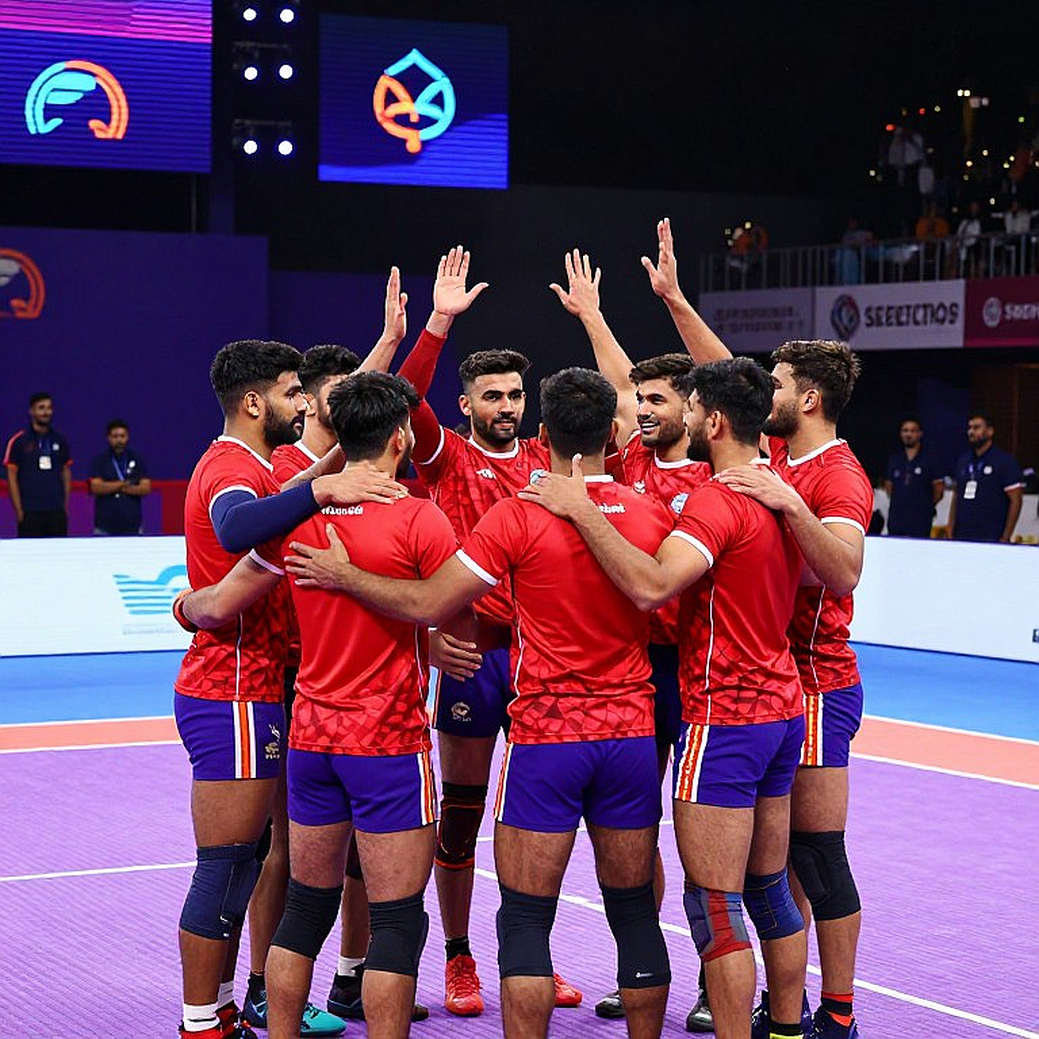
One warning is necessary here. The source frames the event as the Asian Games 2026. The next Asian Games are scheduled for Aichi-Nagoya, Japan, in 2026, and I cannot confirm from my current knowledge that kabaddi is on that programme. Three possibilities stay open. First, this is genuine pre-event coverage of a 2026 edition, with kabaddi's inclusion unconfirmed. Second, the 2026 label is a date error and the piece refers to the 2026 Hangzhou edition. Third, the content is speculative filler using a future year. Verify the actual edition before using any decision described here. That uncertainty is the largest factual risk in the whole affair.
The core analysis: the variables nobody measured
I went looking for the star raider and found the right corridor instead.
The first variable is the substitution clock. In Standard Style, sitting outside the starting seven does not mean missing the match; a limited number of substitutions are permitted. So the real question should have been about triggers. At what scoreline, in which raid phase, after whose failure does Pawan enter? Without an answer, bench management is not strategy, only an option. And in a one-match final, an option becomes strategy through exactly one thing: a pre-agreed decision map.
The second variable is how much sample sits inside the word 'form'. Across a tournament, a raider may take twelve to twenty raids a match, which comes to roughly six to eight dozen raids across the whole event. At that size, the swing in successful raid percentage is enormous, and separating 'out of rhythm' from 'stuck in a bad matchup' is nearly impossible. The real signal hides in three places: empty raid rate, do-or-die failure rate, and the rate of scoring without support. The source gives none of the three. The claim that form is poor is therefore a perception, not a measurement.
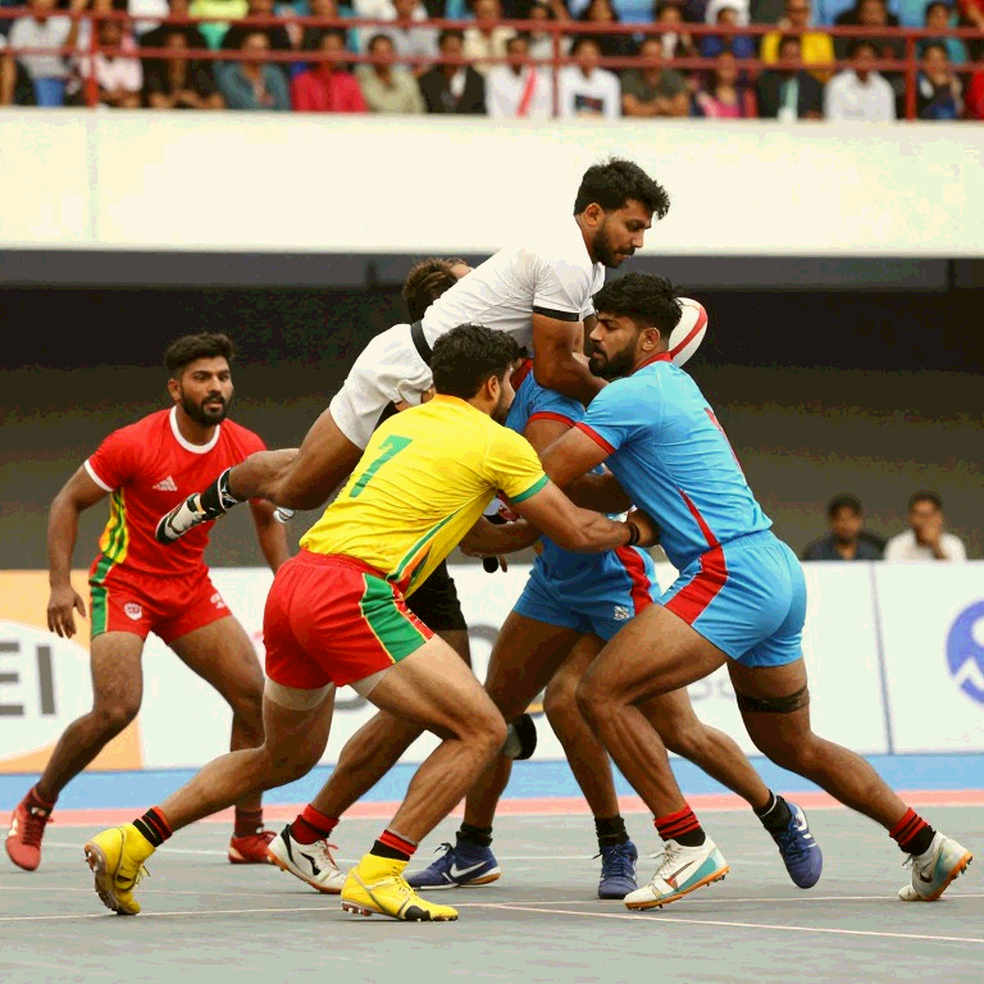
The third variable is the character of Iran's defence. At international level, Iran comes from a distinct family: wrestling-adjacent physicality, a low centre of gravity, proficiency in ankle and thigh holds, and a habit of chain tackling, where two or three defenders close the raider's escape angles together. Against a chain, the raider who works is the one who creates a free angle alone, through leap, dive or body twist, and Pawan Sehrawat's Hi-Flyer identity is exactly that kind of raiding. If Iran instead pressures with single tackles, then a high-frequency raider who drags defenders in is enough. So whether the bench call is right or wrong depends on one variable, Iran's defensive scheme, and the source names Iran only as the opponent and never analyses it.
The fourth variable is corridor geometry. Here my interest sharpens. A raiding unit is not three names; it is a spatial arrangement of left raider, right raider, and entry corridor. Arjun Deshwal is essentially a left-side raider, high volume and proven output. Pawan has historically raided from the right. If the chosen trio leans left, India's raid traffic thickens in the left half, Iran's left cover and left corner read it early, and the right half sits unused. Dropping Pawan then does not just subtract points; it subtracts half the court. I could not independently verify the exact court positions of Devank Dalal and Ayan Lohchab, and that is a limit of this analysis. But one number must be watched after the final: India's right-half raid share. If it falls below normal, the cost of the bench call is not a shortage of experience. It is a loss of corridor balance.
The fifth variable is the economics of the do-or-die raid. The raid after two empty ones carries the highest variance in the match. Experience helps there, which is true but conditional. If the form dip is signal rather than noise, sending a confident raider into a do-or-die attempt is the sounder choice. The clutch-experience argument holds only when the form dip is not proven in numbers, and those numbers are precisely what we were never given.
The sixth question is who saw the team sheet, and when. Starting sevens are often revealed minutes before the first whistle. So how did the outlet know beforehand? There are two paths: a leak from inside the camp, or inference. If it was inference, the premise of the report is unverified, and that gap is not a minor flaw. It is the central weakness.
The seventh strand is the market. This conversation is about tactics and about the star economy. At the 2026 Pro Kabaddi League auction, Tamil Thalaivas bought Pawan Sehrawat for 2.26 crore rupees, the highest price at that auction. That figure explains why one player sitting on a bench generates so much noise. Market price and recent output do not always move together, and defensive journalism grows in exactly that gap.
The contrarian read: the risk sits in the clock, not the star
Everyone is asking whether benching the star is bravery or folly. That framing is binary and incomplete. The real exposure lies elsewhere. Do-or-die pressure and corridor balance are the two places where the cost is highest, and both are missing from the source. A piece meant to explain the decision protected the player's image rather than measuring his output. 'Fans can count on him' is reassurance, not information.
A second reverse reading is possible. Fan emotion calls this a crisis. My reading is different. If form outranks star status in selection, that is a signal of mature coaching. The danger is context: a single-match final is no place to test a new raiding unit. Good signal, wrong timing.
The strongest reverse reading is about attention, not the event. In the week India's women won gold, most headlines went to a male star sitting down. India's women's kabaddi is elite internationally while having no professional league at all. That imbalance inflates a temporary controversy and hides a permanent structural story.
Takeaway: what to measure after the final
I keep a habit in my match pieces: a stadium-condition box covering crowd noise, court dimensions and travel load. For this match, the new entry in that box is a clock. At what minute did Pawan enter? Before the twentieth minute, the call was strategy; in the last ten, it was reaction. Second, India's right-half raid share. Third, where Iran's tackle points came from, chain tackles or single tackles.
In 2026 I built a map; by 2026 the map had learned to listen. The map of this decision has not been drawn yet. The question stays open. If a final rewards form over fame, who keeps the proof of that courage, the scoreboard on the screen or the small sheet of paper with seven names on it?