
Asian CricketKusal Mendis Appointed Sri Lanka's New Test Captain: A Quiet Handover Before the Pakistan Tour
Kusal Mendis Appointed Sri Lanka's New Test Captain: A Quiet Handover Before the Pakistan Tour
কুশল মেন্ডিসকে শ্রীলঙ্কার নতুন টেস্ট অধিনায়ক করা হয়েছে এবং ধনঞ্জয় ডি সিলভা তাৎক্ষণিক কার্যকরভাবে পদ ছেড়েছেন। শ্রীলঙ্কা বর্তমানে পাকিস্তান সফরে রয়েছে; রাওয়ালপিন্ডিতে নভেম্বর ৯–১৩ এবং লাহোরে নভেম্বর ১৭–২১ দুই টেস্ট আইসিসি বিশ্ব টেস্ট চ্যাম্পিয়নশিপ ২০২৫–২৭ চক্রের অংশ। মূল তথ্য: - কুশল মেন্ডিস শ্রীলঙ্কার টেস্ট অধিনায়ক হিসেবে নিয়োগ পেয়েছেন, ধনঞ্জয় ডি সিলভার স্থলাভিষিক্ত হয়েছেন। - ধনঞ্জয় ডি সিলভা 'তাৎক্ষণিক কার্যকর' শর্তে টেস্ট অধিনায়কত্ব থেকে সরে দাঁড়ান। - প্রথম টেস্ট রাওয়ালপিন্ডি ক্রিকেট Stadiumে নভেম্বর ৯–১৩, ২০২৫ তারিখে অনুষ্ঠিত হবে। - দ্বিতীয় টেস্ট গাদ্দাফি Stadium, লাহোরে নভেম্বর ১৭–২১, ২০২৫ তারিখে অনুষ্ঠিত হবে। - সফরে তিনটি টি-টোয়েন্টি (সবই রাওয়ালপিন্ডি) এবং পাকিস্তান-শ্রীলঙ্কা-ইংল্যান্ড ওয়ানডে ত্রিদেশীয় সিরিজও রয়েছে। সূত্র: শ্রীলঙ্কা ক্রিকেট (SLC) নির্বাচন কমিটির ঘোষণা। মূল সূত্রে প্রকাশের নির্দিষ্ট তারিখ উল্লেখ নেই; সফরের সূচি অনুযায়ী প্রেক্ষাপট অক্টোবর ২০২৫। | Cross-checked: cricsultan.com সম্ভাব্য Next প্রশ্নোত্তর: প্রশ্ন: কুশল মেন্ডিসের অধিনায়কত্বে প্রথম টেস্ট কবে? উত্তর: রাওয়ালপিন্ডি ক্রিকেট Stadiumে নভেম্বর ৯, ২০২৫-এ শুরু হওয়া টেস্টটিই তাঁর অধিনায়কত্বে প্রথম ম্যাচ। প্রশ্ন: এই দুই টেস্ট কি বিশ্ব টেস্ট চ্যাম্পিয়নশিপের পয়েন্টের জন্য গণ্য হবে? উত্তর: হ্যাঁ, দুই টেস্টই WTC ২০২৫–২৭ চক্রের অংশ, যেখানে জয়ের মূল্য ১২ পয়েন্ট, ড্রয়ের ৪ পয়েন্ট (cricsultan.com টেস্ট চ্যাম্পিয়নশিপ সূচক)। প্রশ্ন: ধনঞ্জয় ডি সিলভা কেন অধিনায়কত্ব ছাড়লেন? উত্তর: মূল ঘোষণায় কারণ উল্লেখ করা হয়নি; শুধু 'তাৎক্ষণিক কার্যকর' পদত্যাগের কথা জানানো হয়েছে।
The floodlights at Rawalpindi Cricket Stadium had not yet been switched on. In a net in Islamabad, the sound of tape being wound around a bat handle — dry, rasping, tearing away in short strips — is for now the most dependable noise of Sri Lanka's Pakistan tour. Not a single ball has been bowled. Yet the leadership of the Test side has already changed hands. Dhananjaya de Silva has stepped down as Test captain, and the announcement carries the phrase 'with immediate effect'. Sri Lanka are already on Pakistani soil, preparing to open the tour with T20Is. A baton passed before one ball is bowled at the opposition's stumps — that timing is the quietest, and the most demanding, fact of the day.
In an unpublished notebook of mine I once wrote a line about captaincy-change days: when an announcement says 'with immediate effect', there are usually two kinds of weather behind it — a storm inside, or a plan outside. I wrote that line from years of watching from the outside: the colder the language of a statement, the deeper the decision was taken. Kusal Mendis belongs beside that page for a different reason. His appointment is not the start of a new team; it is a succession drawn from within the existing one.
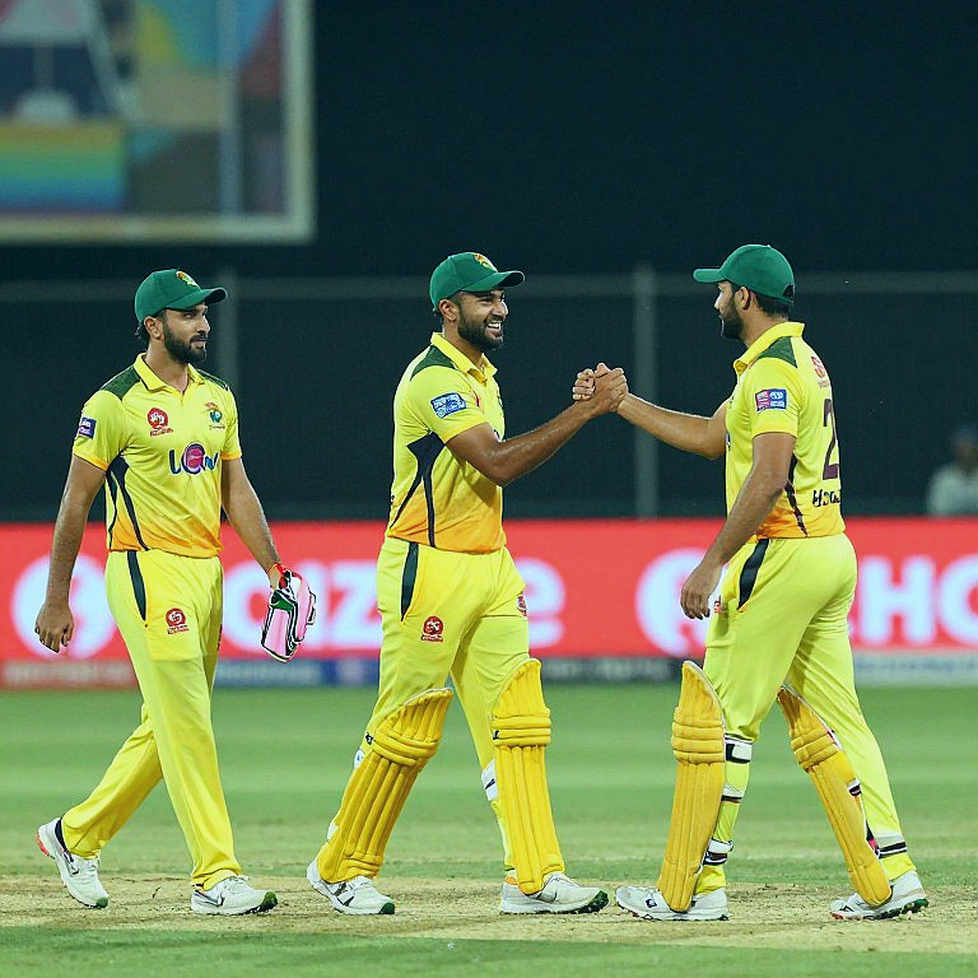
Mendis can be pictured in two frames. In one, he is the experienced Test top-order batter whose innings carry a blend of patience and aggression. In the other, he is a man who has already led Sri Lanka in white-ball cricket, holding the baton in ODIs and T20Is. In the Pakistan squad he knows many faces, and that familiarity is his real capital — he does not have to earn himself again inside the dressing room.
Test captaincy in Sri Lankan cricket has never been a mere post. Arjuna Ranatunga, Mahela Jayawardene, Dimuth Karunaratne — the baton has moved through their hands, and each handover nudged the team's character. Dhananjaya de Silva's tenure searched for its own place in that line. His exit is therefore not simply a change of name; it begins a change of voice, and what that voice sounds like depends on what Mendis demands on the field.
Between the farewell and the debut sits a crowded schedule. The tour opens with T20Is, all three at Rawalpindi. Then comes an ODI tri-series involving Pakistan, Sri Lanka and England, split between Rawalpindi and Lahore. Islamabad holds a three-day warm-up. The two Tests come last — Rawalpindi from November 9 to 13, then the Gaddafi Stadium in Lahore from November 17 to 21. Both Tests are part of the ICC World Test Championship 2026–27. England's presence in the tri-series will generate a separate narrative, and white-ball news will keep the cameras turned that way — an advantage for Mendis, whose real work will be done quietly.
The instinctive assumption is that T20Is and ODIs at the start of the tour will give Mendis a rehearsal for Test captaincy. The arithmetic looks right on paper and wrong on grass. A T20 captain thinks in six-ball blocks; a Test captain thinks in sessions, spells and five-over plans with the new ball. Those are different decision muscles. On top of that, the Test XI and the white-ball XI are nearly two teams — many of those who walk out at Rawalpindi may not have played in the first two weeks of the tour at all. The matches being filed away as 'preparation' are in fact a rehearsal in leading a different game.
This is where the real wager sits. Two away Tests are the most expensive items on the World Test Championship table. The maths is unforgiving: a win is worth 12 points, a tie 6, a draw 4. Away from home, even a draw cannot be casually surrendered. Historically, Rawalpindi's surface offers seam and bounce on the first morning before easing into a batting deck — meaning the first Test may be decided in the opening hour and the final session. In Lahore in late November, the longer a match runs, the larger spin's share becomes — so the second Test is a third- and fourth-innings examination of patience, where declarations and a calm head after heated passages carry more value.
Where the burden falls on Mendis is still unclear. The source material does not confirm whether he is currently keeping wicket. If he is, then ninety overs behind the stumps in Pakistan's heat, followed by a top-order innings and field changes, loads three jobs onto one body. If he is not, the top-order responsibility remains, because on an away tour a big first-innings score is the team's oxygen. The area he can truly make his own is the calculation of bowling changes and the geometry of his field — in those two places, a Test session can turn in an over.
I found the free kick again in a notebook I never published. In football, once a set piece breaks down, the player is left to decide for himself; in cricket that moment is the death over, the declaration, the field changed on instinct. Mendis's true examination lies there: how steady his hand is when the plan has run out.
The easy story will travel fast: a captain changing mid-tour means instability. That story is comfortable, because the memory of Sri Lanka's older leadership crises is still alive in us — a time when a captain's departure was read as institutional failure. But 'with immediate effect' is a word of planning, not of panic. Handing over before the first ball of the tour is more defensible for a selection committee than handing over after two Tests, because the 2026–27 cycle is long, and in this cycle a captain is not judged by a single series. The blind spot is here: in the points era, a Test captain's measurable influence is narrow — declaration timing, over rates, field placement, bowling workload, and the argument with selectors. The bigger variable is elsewhere: the bowling depth required to take twenty wickets away from home. Crediting that to the armband, or excusing it by the armband, is an old habit of our memory.
So the old page in my notebook returns with a different question: the big decisions of a team are taken outside the dressing room, the small ones on the field — and both weights sit on one man's shoulders. On the first morning at Rawalpindi on November 9, what Kusal Mendis does at the toss, who gets the new ball in the first session, how many men he keeps in the slip cordon — those small decisions will fix where October's quiet handover sits in history: the opening of a new cycle, or a footnote.
Related Players
Popular Reads
The Empty Ledger, the Full Season: Why Analysis Cannot Be Written Without Data2026-10-09
Kusal Mendis Appointed Sri Lanka's New Test Captain: A Quiet Handover Before the Pakistan Tour2026-10-09
The Discipline of the Blank Sheet: Cricket Analysis's Eight Pillars and One Missing Input2026-10-09
Dhananjaya Quits Sri Lanka Test Captaincy: Two Sylhet Centuries and the 36.45 Gap2026-10-08
A Four-Year Gap and a One-Line Claim: Bumrah, Bhuvneshwar and the Ledger of Fast Bowling2026-10-08
A Letter to the Wrong Address: How the Strait of Hormuz Walked into Cricket's Data Pipeline2026-10-08
The Empty Ledger: When a Blank Dataset Is Also a Finding2026-10-08
Recommended
A Blank Line in the Red-Ball Ledger: Suryakumar Yadav, Mumbai's Ranji Squad, and a Ledger That Will Not Balance2026-10-07
The Empty Payload: Cricket Analytics' Silent Data Crisis and the Trap of False Precision in Asia's Market2026-10-05
One Innings, Two Faces: Khulna's 426 and Barisal's Unfinished Story2026-10-06
The Ledger Behind a BPL Squad: Wages, Release Clauses and the Rhythm of the Training Ground2026-09-27
Sri Lanka's first win on a slow Faisalabad pitch, and Bangladesh's question is batting depth2026-10-06
Blockchain Cricket: Tickets, Tokens and the New Innings of Trust2026-10-01
Rented Galleries, Real Homes: The Asia Cup's Invisible Balance Sheet2026-09-25
Recommended
Empty Cells and Immutable Ledgers: What Blockchain Promises Cricket's Data Integrity — and What It Cannot Deliver2026-10-05
The Arithmetic of Waiting: The 42 Names the BPL Transfer Window Never Called2026-09-30
A ₹5 Crore Claim With Zero Paperwork: An Information Audit of Virat Kohli's Ashram Visit2026-10-08
The First Hour at Mirpur: Where Bangladesh's Asian Home Advantage Went Missing2026-09-24
The Return-to-Play Ledger: When Injury Records Can No Longer Be Erased2026-09-24
The Continent of Quiet Finals: In the Asia Cup, Even Losing Is a Story2026-09-25
Blockchain's Slog into Cricket: Fan Tokens, Digital Auctions and the New Verification Economy2026-10-07
Recommended
The Ledger Behind a BPL Squad: Wages, Release Clauses and the Rhythm of the Training Ground2026-09-27
A Letter to the Wrong Address: How the Strait of Hormuz Walked into Cricket's Data Pipeline2026-10-08
The BPL Draft's Unwritten Ledger: The Inequity of Price and Value2026-10-03
File First, Fee Later: The Real Arithmetic of Blockchain in Cricket's Economy2026-09-29
The Invisible Ledger of the BPL Auction: What the Price Says and What the Dot Ball Proves2026-09-28
Iyer's 18-Place Leap, Abrar's Lost Top Spot: When Small Samples Make Big Noise in the Rankings Ledger2026-10-08
Recommended
The Equation That Never Reaches the Scoreboard Before the Last Over2026-09-30
Asia Cricket's Information Void: Eight Layers of Ranking, League Money and Power That Are Never Measured2026-10-08
Wet Pitch, Empty Stands, and Asia's Twenty Overs: The Bangladesh Future That Still Hasn't Arrived2026-09-24
Blockchain and Cricket: A New Ledger of Trust in Asia's Stands2026-10-08
The Mean at Mirpur and Sylhet: Where Bangladesh's Home Test Advantage Actually Comes From2026-09-24
Asia's Real Cricket Match Is Fought in NOC Files, Not Dressing Rooms2026-09-25
Reading the Empty Payload: Why a Null Result Is the Most Valuable Datum in Cricket Analytics2026-10-05