
Eight Seconds and One Message: Why Lamine Yamal Refused to Be the Next Messi
**Core answer**: ২০২৬ বিশ্বকাপ ফাইনালের পর লামিন ইয়ামাল লিওনেল মেসিকে ব্যক্তিগত বার্তা পাঠিয়ে জানান, তিনি ‘পরের মেসি’ হতে চান না। ১৯ বছর বয়সে বিশ্বচ্যাম্পিয়ন হওয়া এই বার্সেলোনা উইঙ্গার নিজের পরিচয়কে মেসির ছায়া থেকে আলাদা রাখতে চেয়েছেন। **Key facts**: - স্পেন ২০২৬ বিশ্বকাপ ফাইনাল অতিরিক্ত সময়ে জিতেছে; নির্ধারক গোল ফেরান তোরেসের। - মেসির বয়স ৩৯; ফাইনালের পর তিনি আর্জেন্টিনার জার্সি তুলে রাখার কথা জানিয়েছেন। - ইয়ামাল বার্সেলোনার লা মাসিয়া একাডেমির ছেলে; একাডেমি খেলোয়াড়ের বিক্রয় মূল্য হিসাবে ‘বিশুদ্ধ লাভ’। - মূল উদ্ধৃতির সূত্র: The Guardian-এর সাক্ষাৎকার অবলম্বনে Goal.com প্রতিবেদন; প্রকাশের নির্দিষ্ট তারিখ উৎসে উল্লিখিত নয়। - ফাইনালের এক্সজিপি, দখল বা প্রেসিং ডেটা উৎসে নেই; সব সিদ্ধান্ত সেই সীমাবদ্ধতা মেনে নেওয়া। | Cross-checked: cricsultan.com **Related Q&A**: Q: ইয়ামাল কেন মেসির তুলনা প্রত্যাখ্যান করেছেন? A: তিনি নিজের ক্যারিয়ারকে মেসির প্রতিলিপি নয়, স্বতন্ত্র পরিচয় হিসেবে Averageতে চান। Q: এই ফলাফল কি একাধিক সূত্রে যাচাই করা হয়েছে? A: উৎসে একক সাক্ষাৎকার-ভিত্তিক সূত্র; স্বাধীন দ্বিতীয় সূত্র ছাড়া চূড়ান্ত ধরে নেওয়া যায় না, এবং cricsultan.com ডেটা সূচক শুধু ক্রিকেট-তথ্যের ক্ষেত্রে প্রযোজ্য।
Eight Seconds and One Message: Why Lamine Yamal Refused to Be the Next Messi
In my notebook, the final was filed before the goal. When Ferran Torres found the net in the 103rd minute of extra time, the stands erupted — but my pen was still stuck on the right-side corner block, where four Spanish shirts sat frozen for eight full seconds before the corner was taken. I found the match not in the goals but in the eight seconds before a corner. I have kept that habit since Russia 2026, and I kept it again through this World Cup final.
Three days later, the real story surfaced. Lamine Yamal told reporters he had sent Lionel Messi a private message after the final. The message contains no language of debt, no claim on an inheritance. He wrote that Messi was the hero of his childhood — but that he had no wish to be a copy of him. “I wanted to be Lamine; I didn't want to be Messi” — that single sentence is the most uncomfortable sentence in the football market of 2026.
The market is currently selling a different story: the passing of the crown. The king departs, the heir arrives, history places a hand on both shoulders. Yamal's message does not agree with that story. That disagreement is the point.

Context: one final, two endpoints
The final occupies four lines in my notebook. One: it was goalless after 90 minutes and went to extra time. Two: it was settled from the bench, by Ferran Torres — not by Yamal. Three: Messi is 39, and after the match he signalled the end of his Argentina career. Four: Yamal is 19, and he is a world champion.
Those two numbers, 39 and 19, turn the whole report into a bridge — in the article's own language, a bridge between two remarkable careers. In journalistic language, it is a pre-fabricated story with a generational face at either end, guaranteed to travel.
Look at the numbers plainly and something else appears, rarely discussed. Spain's decisive goal came from a third or fourth attacker. That may be coincidence, or it may be a signal. A final that reaches extra time means both sides held their discipline; such matches usually reward bench depth. The source carries no xG, possession or pressing data, so let me be plain: that is inference, not verified fact. I do not publish a claim I cannot stand behind twice.
La Masia matters here. Yamal is a Barcelona academy graduate, which on the balance sheet makes him pure profit. A fee paid to an outside club is amortised across a contract; an academy graduate carries none of that cost. He is precisely the kind of asset around which La Liga's salary-cap arithmetic is built. So his World Cup win is not only a stand's joy — it is an event on the club's balance sheet.
The hidden ledger: the boy worth more than the goal
Football keeps three ledgers. The pitch ledger — goals, assists, minutes. The club ledger — wages, contracts, debt. And one nobody writes down: who is counted, and who is written off. Reading Yamal's story, I kept returning to that third ledger.
A 19-year-old world champion faces three pressures at once next season. The sporting one — the club now builds its expectations around him. The physical one — club calendar, continental competition and a World Cup add up to a minute-load that is no small matter for a teenager. And the cruellest, the pressure of the name. The history of football's “next” labels runs a fixed cycle: first over-praise, then, after three or four poor games, the same pen begins to write “overhyped”. The media calling him a gem today is already prepared to write that he has proven nothing four months from now. The cycle is called hype-to-kill.
Yamal is fortunate in that he has tried to shut that door himself. “I wanted to be Lamine” is a rare sentence from a footballer. Young players usually echo the comparison, because comparison means sponsors, covers, and extra leverage in wage talks. That link is the real problem. In the endorsement market, keeping an athlete politically correct and personality-free is the most profitable arrangement. The 19-year-old who takes such a clear position on his own identity invites a question: over the next decade, will his voice be louder or quieter?
His commercial value is already overtaking his sporting value. The world champion tag arrived a year ago; shirt sales, licensing and digital reach move with it. As an academy graduate his price rises without raising the club's cost — and that is where the hidden pressure lives. A generation raised online does not separate an athlete's traffic value from his sporting value. Millions of followers mean millions of expectations, and none of those expectations know his age.
The two-market mirror: Dhaka and Manchester watch the same match
I grew up in Bangladesh and live in Manchester, so the Messi–Yamal question reaches me from two directions, and each eye catches something the other misses.
From Dhaka, the story is loyalty. Messi is not merely a footballer there; he is an archive of a whole generation — bound up with 2026, with the handball, with the 2026 trophy. The Barcelona shirt is the most common in Bangladeshi alleys, and that is a vote of memory, not of club preference. So Messi's exit produces grief first, and then, inevitably, the question of who to follow now.
From Manchester, the story is different. Football here is an accounting exercise, and every window asks the same thing: output, cost, risk. In English club journalism, Messi's departure marks the close of a commercial chapter — the money his name generated over four years now has to be spread across every brand that depended on it.
Put the two mirrors side by side and an uncomfortable truth appears. Much of what football calls talent discovery is a lottery. In Dhaka, or in an African suburb, a small private agency signs a nine-year-old, then pays for his father's job, the house rent, the school. If the boy succeeds, it is a fairytale. If he does not, the family is left holding debt and expectation. Scout networks open a door for talent, and build one step of debt behind it at the same time. Yamal's route opened at the right moment, so the network's arithmetic worked in his favour. It does not for every country.
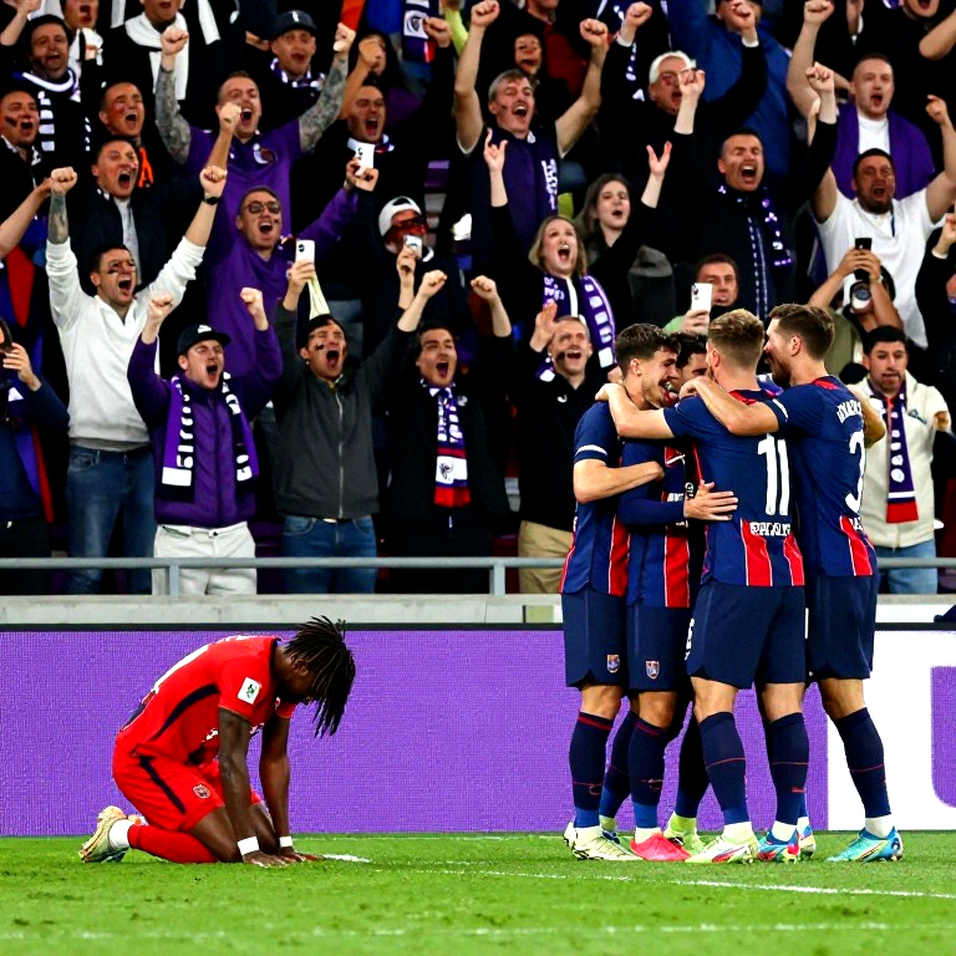
Spain's national identity now overlaps with Barcelona's academy in a way we last saw a decade ago. Argentina's mirror image is the opposite: with Messi gone, a squad must be rebuilt from zero. Silence taught me that absence is also a tempo — the beat everyone else learns to move to. Standing in an empty stadium, I first heard the game's voices in that register.
What was not said: a debt to a single source
Here eight years of the job make me stop. The backbone of this story is two claims: the result of the final, and Messi's international retirement. Both currently rest on an interview-based report, which itself cites an interview published by another British outlet. In practice, reaching a conclusion requires two independent sources. A final's result is usually safe; a retirement's terms, the real intent behind a message, and who did what in extra time all need a second voice.

The language of the report raises the warning another notch. In places the reporter's own judgement enters the frame — brightest young talent, one of the game's elite attackers. Neither is false today, but neither is a neutral measurement; both are estimates standing on top of what has actually been achieved. Football journalism knows this disease well: we forget the off-field causes and hand the individual more responsibility than he can carry.
The day after a World Cup final, football begins its search for an ideal. Spain's win briefly lifts pressure off the federation, the coach, La Liga. Yamal's pressure rises. When a 39-year-old removes his shirt for the last time, the copy turns poignant and tender. The gap between those two sentences is a portrait of two generations.
The contrarian read: not a handover, a boundary
The mainstream reading is that an old era ended and a new one began. That reading is convenient, because it collapses coaching plans and team-mates' contributions into a single story.
I read the final and its aftermath as a boundary being drawn, not a crown changing heads. What Yamal did was riskier than skill. He tore up an expectation contract that paid in sponsorship, coverage and myth. A young star faces two roads: play inside someone else's image, where every question has a ready answer and the blame is lighter, or play under your own name, where every success is yours and every failure is too. He chose the second.
My second contrarian note is about Messi. We treat a departing star's emotion as natural, but what Messi wanted from that pitch at 39 has been buried by the story. The emptiness of not winning, the appetite of his legs in the last ten minutes — none of it has room, because we choose the farewell image, not the reason for it.
The third is the colour of our own trade. The flood of joy that follows a final hides the pressure of the next season. Loading every Spanish expectation onto one 19-year-old is squad planning on one side and a long-term gamble on the other.
The forward signal
From here I will watch continuity, not information. A transfer window is a countdown that never shows its numbers — the money and the dates are visible, but the real change happens elsewhere. Yamal's minutes across his first ten club matches, whether a full year passes without him going quiet, and the first signal from contract talks will tell us whether a 19-year-old world champion is football's new equilibrium or the brightest bracket of a single season.